

Now: Department of Neurology @UCSF
About Me
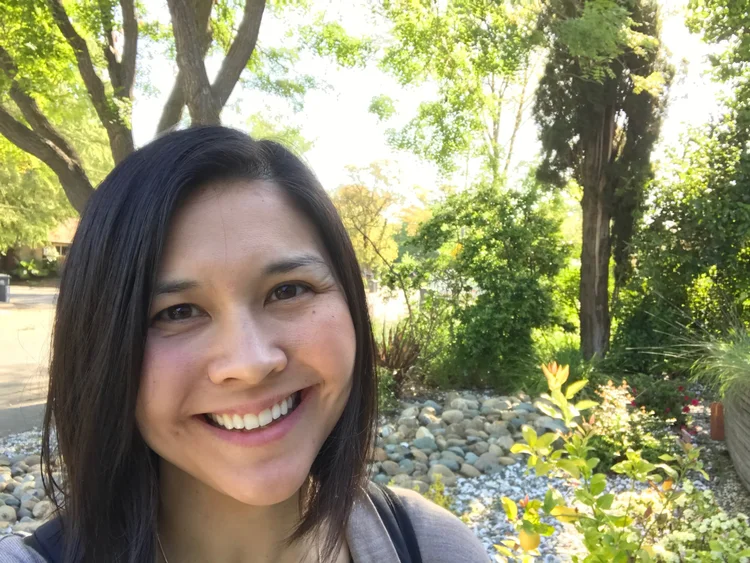
Welcome to my researcher page! I am a postdoctoral researcher in Dr. Reza Abbasi-Asl’s lab as part of the UCSF Department of Neurology. I work on method development in transformer-based spatial transcriptomics algorithms, causal inference with an emphasis on understanding driving factors of neurodegenerative disease, and machine learning interpretability research. I recently defended my PhD in Human Genetics at the University of Pittsburgh, where I worked for four years as a member of Dr. HJ Park’s lab. I primarily focused on developing machine learning and causal inference methods to better understand the role of risk factors for complex diseases. Additionally, I worked on interpretability research to better understand how single cell foundation models perform in perturbation tasks. Please check out the papers and projects I’ve worked on in the Published Work tab.
I received my M.S. in Genetic Epidemiology from the University of Washington, Seattle in June 2022, and my B.S. in Genetics and Genomics from the University of California, Davis along with a minor in Statistics in June 2020. I credit a lot of my scientific curiosity and appreciation for research to my time working in Dr. Megan Dennis’s lab and the wonderful mentors I had as an undergrad.
When I’m not on research duty, my hobbies include watching any and all sports, playing the piano and drums, playing basketball and tennis, nature photography, and all things coffee.
I am very passionate about teaching and mentorship, and believe it is incredibly important to share the knowledge and insights I have gained during my time as a researcher! If you have any questions about my work, or just want to chat about research, feel free to send me an email at: aditya.sriram@ucsf.edu.
My Academic Journey
2013 — presentif my work were a genome browser...
Scroll across the tracks to explore the full timeline.
- UC Davis 2016–2020B.S. University of California, Davis. Genetics & Genomics · Statistics minor.
- University of Washington 2020–2022M.S. University of Washington. Genetic Epidemiology.
- University of Pittsburgh 2022–2026Ph.D. University of Pittsburgh. Human Genetics.
- UCSF 2026–presentPostdoc University of California, San Francisco. Neurology · Abbasi-Asl Lab.








Explore publications and contributions
DeepEXPOKE: A Deep Learning Framework with Polygenic Risk Scores as Knockoffs for Deconvoluting Genetic and Non-Genetic Exposure Risks in Sepsis and Coronary Heart Disease
October 2024 · Public preprint · Genome Medicine · In press
Full citationDeepDiff-SHAP: Interpretable deep learning for subgroup-specific causal hypothesis generation using conditional SHAP
December 2025 · Pacific Symposium on Biocomputing · Conference paper
Full citationData from: Estimating in-silico causal effects of DNA methylation on gene expression through genetic anchors in airway epithelium from youth with and without asthma
March 2026 · Dryad · Dataset
Full citationEstimating in silico causal effects of DNA methylation on gene expression through genetic anchors in airway epithelium in asthma
April 2026 · Science Advances · Published
Full citationeQTM (expression quantitative trait methylation) Atlas: a comprehensive resource of over 11 million DNA methylation-gene expression associations through across 11 tissues and 4 diseases
June 2026 · bioRxiv · Preprint
Full citationAdvancing Methodological Foundations in Precision Medicine Through Novel Causal Inference, Machine Learning, and Artificial Intelligence Frameworks
2026 · University of Pittsburgh · Doctoral dissertation
Full citationGlobal carbohydrate metabolism is increased and beta hydroxybutyrate decreased in sepsis vulnerable children compared to sepsis tolerant children; a cohort study
September 2026 · Research Square · Preprint
Full citationPrediction transfer does not imply reliability transfer in single-cell foundation models
October 2026 · bioRxiv · Preprint
Full citationEpstein-Barr Virus Seropositivity, Immune Dysregulation, and Mortality in Pediatric Sepsis
August 2025 · JAMA Network Open · Published
Full citationMild Hypoxia Accelerates Cerebral Cavernous Malformation Disease Through CX3CR1-CX3CL1 Signaling
April 2024 · Arteriosclerosis, Thrombosis, and Vascular Biology · Published
Full citationUnveiling the Gut Microbiome Network Fingerprint: A Deep Learning Approach to Predict Immunotherapy Response in Melanoma Patients
October 2024 · bioRxiv · Preprint
Full citationRefining empiric subgroups of pediatric sepsis using machine-learning techniques on observational data
January 2023 · Frontiers in Pediatrics · Review
Full citationDeep neural networks with knockoff features identify nonlinear causal relations and estimate effect sizes in complex biological systems
July 2023 · GigaScience · Published
Full citationBiological Pathways Enriched for Genes Associated with Lesion Burden in Cerebral Cavernous Malformation
February 2022 · Stroke · Conference abstract
Mentors: Dr. Helen Kim, Dr. Shantel Weinsheimer
Full citationGenetic Risk Factors Associated with SARS-CoV-2 Susceptibility in Multiethnic Populations
August 2022 · Journal of Biology and Today's World · Published
Mentors: Dr. Kathleen F. Kerr
Full citationAssessment of Autism Zebrafish Mutant Models Using a High-Throughput Larval Phenotyping Platform
November 2020 · Frontiers in Cell and Developmental Biology · Published
Mentors: Dr. Megan Dennis, Dr. Alexandra Colón-Rodríguez
Full citationBody Size Preference of Marine Animals in Relation to Extinction Selectivity
2014 · AGU Fall Meeting Abstracts · Conference abstract
Full citationOstracod Body Size as a Variable of Biomass
2013 · AGU Fall Meeting Abstracts · Conference abstract
Full citation